
English| EUR
Suggested for you
More currencies
Choose a language
Venice sits on a lagoon; the Dolomites rise roughly two hours north of it. Between the two lies a corridor of autostrada, valley roads and rail-and-bus connections that most first-time visitors misjudge by an hour or more. This how to get to the dolomites from venice guide sets out the realistic options, the distances involved, and the timing that decides whether a trip feels rushed or unhurried.
Quick answer
The nearest Dolomite valleys sit roughly two hours north of Venice, and the region itself charges no entrance fee — 0 EUR — with access open around the clock, 00:00–23:59, every day of the week. The practical constraint is not admission but arrival: aim for the 07:00–10:00 window to avoid mid-day parking congestion and peak crowds at popular trailheads.
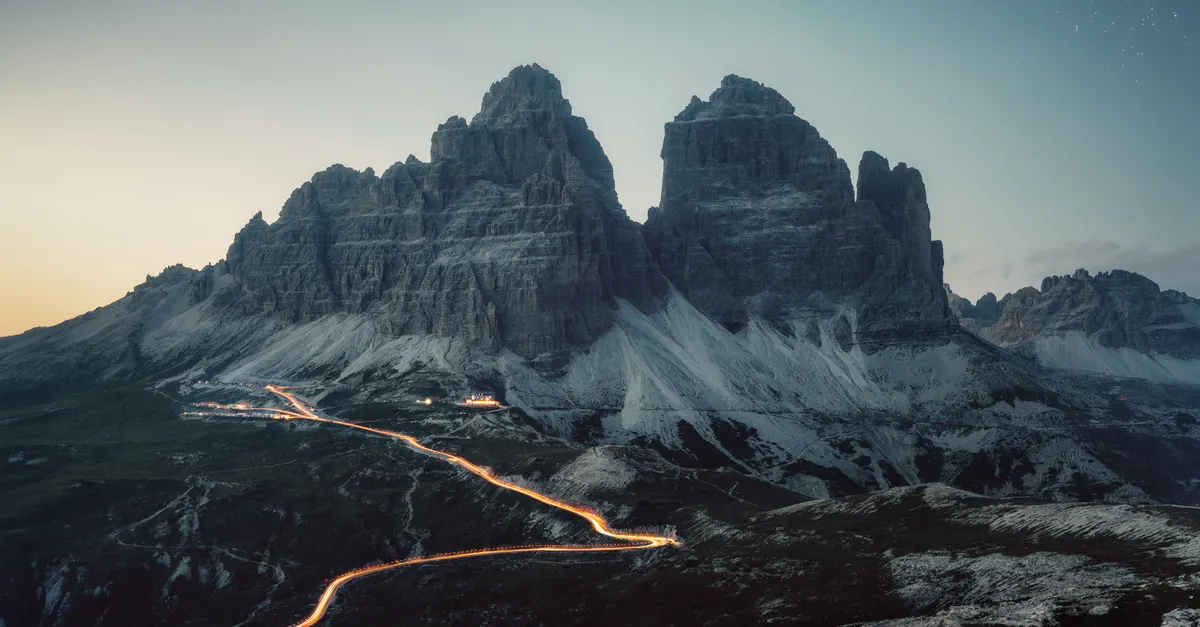
The Dolomites were a coral reef before they were mountains. The pale rock that turns rose at dusk formed on a shallow tropical seabed, then lifted; the same tectonic pressure that raised it also left the range fractured into dozens of separate valleys rather than one continuous massif. That fracture is the single most useful thing to understand when planning how to get to the dolomites from venice, because there is no single destination — Cortina d'Ampezzo, Val di Funes, Alpe di Siusi and Lago di Braies sit in different provinces, on different roads, and can differ by ninety minutes of driving from one another despite looking adjacent on a map. Administratively, the region spans Belluno, South Tyrol and Trentino, three provinces with three road authorities and three languages in common use. Signage shifts from Italian to German as travellers cross into Alto Adige, and place names double: Bolzano is Bozen, Val Gardena is Gröden, Val Pusteria is Pustertal. A Venezia Dolomiti route search will return results under both names, which explains why online timetables sometimes appear to contradict each other. The A27 autostrada runs north from Mestre toward Belluno and forms the spine of most journeys; beyond its terminus, the valley roads narrow, climb, and slow considerably. Passes such as Falzarego and Sella are scenic but add time, not save it. The practical consequence is that a Dolomites day trip rewards choosing one valley and committing to it. Visitors who attempt three in a day spend most of it behind the wheel on switchbacks. Because the range carries UNESCO World Heritage status as a natural site rather than a gated monument, there are no barriers, no ticket gates and no closing time — the constraints are parking capacity, cable-car operating seasons, and daylight. Several trailhead car parks fill entirely before mid-morning in August, and some access roads to lakes and high plateaus are restricted to shuttle buses during summer peak. Anyone weighing how to get to the dolomites from venice should therefore work backwards from a specific valley, then match it to a transport method — self-drive, rail-and-bus combination, or a guided departure — rather than the reverse. The detailed route breakdowns, seasonal timing and cost guidance that follow on this page set out each option in turn, alongside the preparation worth doing before leaving the lagoon.
“There is no single destination — only a dozen valleys that look adjacent on a map and are not.”
The Dolomites span the provinces of Belluno, South Tyrol, and Trentino, reachable from Venice by road or a combination of rail and bus. Private vehicles offer the most direct access to various trailheads, while public transport connects major transit hubs to gateway towns.
A27 motorway toward Belluno and SS51 toward Cortina d'Ampezzo
Trenitalia from Venezia Santa Lucia to Calalzo di Cadore
Dolomiti Bus or Cortina Express from Venice Marco Polo Airport to Cortina d'Ampezzo
Plan your arrival for the 07:00–10:00 window to secure parking at popular trailheads and avoid mid-day congestion.
The optimal time to visit the Dolomites is during the shoulder seasons of June or September to balance favorable weather with manageable visitor numbers. Regardless of the season, travelers should prioritize an arrival window of 07:00–10:00 to avoid mid-day parking congestion and peak crowds at popular trailheads.
Warm, 15°C to 25°C
Peak tourism season with all facilities open and accessible. Expect high demand for parking and popular trails
Mild, 10°C to 20°C
Ideal conditions for hiking with fewer crowds than mid-summer. Trails are generally clear of snow
Cold, -5°C to 5°C
Heavy snowfall limits trail access but supports regional ski activities. Roads may require winter equipment
—
Arrivals between 07:00–10:00 provide the most reliable access to parking. This window avoids the congestion found later in the day.
Verdict: Plan your trip for mid-week in September, ensuring an arrival between 07:00–10:00 to secure parking and trail access.
The Dolomites are a vast mountain region rather than a single gated attraction. Consequently, there is no entrance fee required to access the area.
Verdict: A typical adult pays 0 EUR for regional entry, with costs only arising from optional services like cable cars or private mountain hut accommodation.
Work through these steps in order, starting a few weeks out and finishing the morning you leave Venice.
The Dolomites region is accessible 24 hours a day, seven days a week. While the natural landscape remains open at all times, individual services such as mountain huts, cable cars, and visitor centers operate on their own specific schedules.
While the region remains open, specific seasonal closures apply to individual mountain lifts and regional infrastructure throughout the year.
Everything you need to know about how to get to the dolomites from venice
To organize your journey, you can rent a car or join a guided excursion to reach the mountain region. Understanding how to get to the Dolomites from Venice involves navigating mountain passes and scenic routes that typically require several hours of travel time.
There is no single direct train connecting the city to the heart of the peaks. You may take a train to a gateway town like Belluno, but you will still need a bus or private transfer to reach the high-altitude trails.
The best arrival window is 07:00–10:00. This early start helps you avoid mid-day parking congestion and peak crowds at popular trailheads.
There is 0 EUR entrance fee for the Dolomites as a region. The area is public land, meaning you do not need to pay a site-specific admission fee to enter the natural park.
Many travelers utilize regional bus networks or organized shuttle services. These options are often more efficient than public transit when learning how to get to the Dolomites from Venice without a personal vehicle.
The biggest mistake is leaving too late in the day, which leads to heavy traffic and parking shortages. Always aim to arrive early to ensure you have enough time to explore the alpine landscape comfortably.
Dolomites and Cortina Day Trip
Read more GuideDolomites Day Trip Itinerary
Read more GuideDolomites Day Trip FAQs
Read more GuideDolomites Day Trip from Venice by Train
Read more Tickets & toursDay Tours from Venice to Dolomites
Read more Tickets & tours2-Day Dolomites Trip from Venice
Read more