
English| EUR
Suggested for you
More currencies
Choose a language
Venice sits at sea level; the Dolomites begin roughly two hours north, at the point where the regional lines run out and the limestone starts. This Dolomites day trip from Venice by train guide explains what a timetable can realistically deliver between dawn and dusk, and where the track stops short of the peaks. It also sets out the open, unrestricted nature of the region itself.
Quick answer
Yes, and entering the region costs nothing: the Dolomites are open 00:00–23:59 every day of the week, with no gate, no ticket office and an entrance fee of 0 EUR. Trains from Venice reach the valley railheads, where local buses continue upward. Aim to arrive between 06:00 and 09:00; individual cable cars and parks charge their own separate fees.
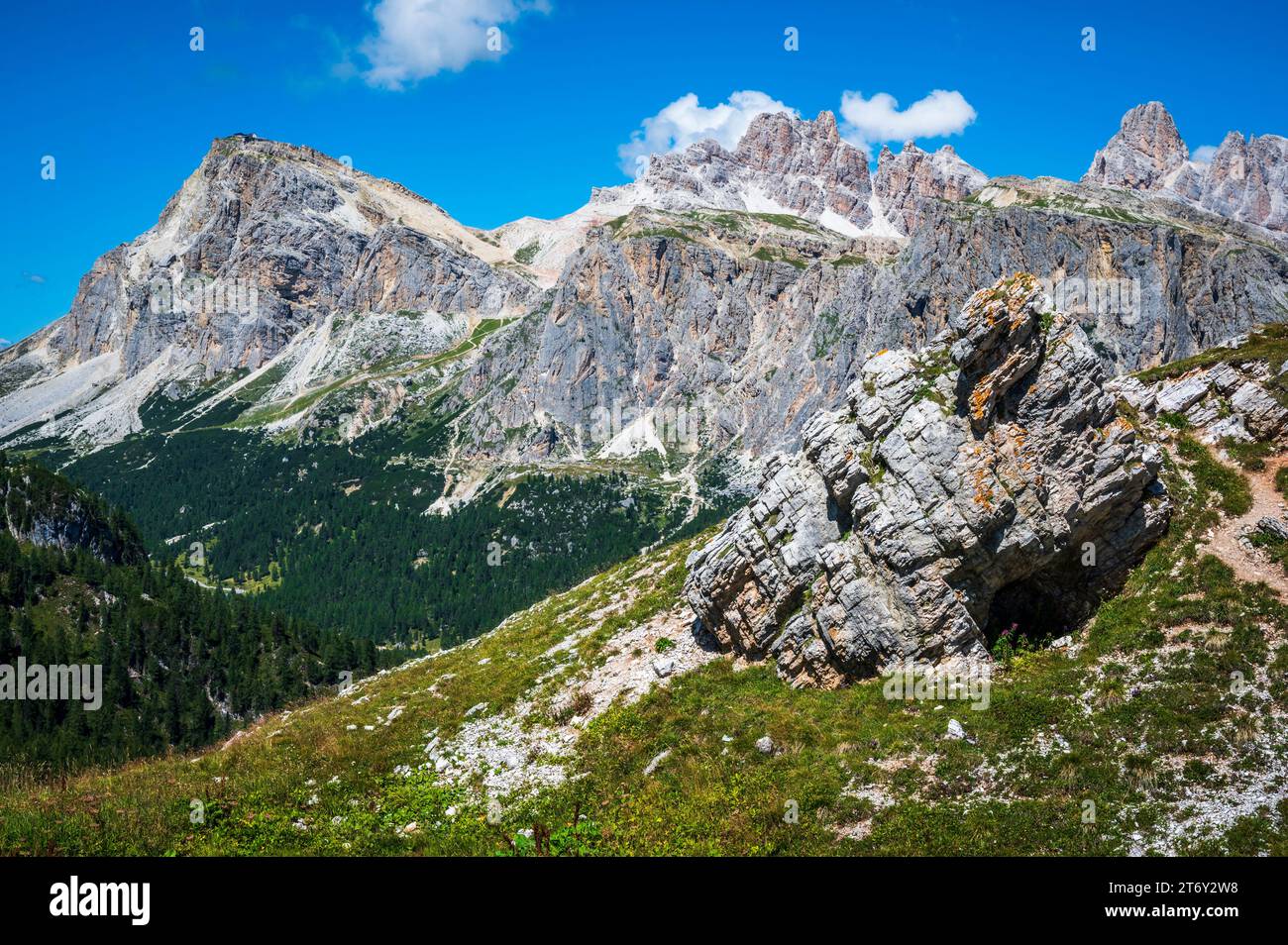
No train has climbed into Cortina d'Ampezzo since 1964. The narrow-gauge Ferrovia delle Dolomiti, built during the First World War and later used to carry spectators to the 1956 Winter Olympics, was closed and lifted; its trackbed is now the Lunga Via delle Dolomiti cycle path. That closure still shapes every Dolomites day trip from Venice by train planned today. The rail map, then, defines the outer edge of the day rather than its centre. Regional services leave Venezia Santa Lucia and Venezia Mestre and run north through Treviso and Conegliano into the Piave valley, terminating at Belluno or at Calalzo-Pieve di Cadore-Cortina, the historic railhead of the Cadore. Beyond those platforms, the Ampezzo valley, Lago di Misurina and the Tre Cime massif are reached on the local bus network. A second, longer corridor swings west toward Verona and Bolzano before turning into the Val Pusteria for Dobbiaco and Lago di Braies. Both routes end where the limestone starts, which is the defining constraint of any Venice-to-Dolomiti rail journey, or gita in treno da Venezia alle Dolomiti as it is known in Italian. Scale explains why this matters. These Veneto mountain landmarks were inscribed on the UNESCO World Heritage list in 2009 as nine separate mountain systems spread across five provinces, an area far too large to sample broadly between two train departures. A single day therefore buys one valley and one viewpoint, not a circuit. Visitors who accept that constraint tend to leave satisfied: a morning in the Cadore, an afternoon lift above the treeline, and the return south while the enrosadira, the rose-coloured glow that briefly reddens the rock at dusk, works across the walls behind them. Those chasing four valleys tend to spend the day in transit. Nothing about the destination itself gates the visitor. The region has no perimeter, no ticket office and no closing time; the mountains stand open through the whole day and night, and access to the landscape costs nothing at all. What does gate the day is the timetable, the seasonal bus calendar and the operating windows of individual cable cars, each of which shifts through the year. Readers planning a Dolomites day trip from Venice by train will find those variables handled in the dedicated sections below, alongside the practical preparation that altitude quietly demands.
“Both routes end where the limestone starts: the rail network defines the outer edge of the day, not its centre.”
The Dolomites are located in northeastern Italy, with the most direct rail approach from Venice involving a connection through regional hubs. Travelers should depart from Venezia Santa Lucia or Venezia Mestre to reach gateway towns.
Trenitalia regional service from Venezia Santa Lucia to Belluno
DolomitiBus service from Belluno station to various mountain trailheads
Trenitalia regional service from Venezia Santa Lucia to Calalzo di Cadore
The best arrival window is 06:00–09:00. Early arrival avoids peak crowds and ensures maximum daylight for mountain exploration.
This plan suits reasonably fit travellers with one full day and no overnight stay, running roughly 15 hours door to door from Venice. It assumes the recommended 06:00–09:00 arrival window in the mountains and a single valley base rather than several.
Board the first regional service of the day toward Belluno or Calalzo-Pieve di Cadore, allowing around two to two and a half hours. Eat before departure, as onboard catering is limited on regional trains.
Arrive at Calalzo-Pieve di Cadore or Belluno and connect to the Cortina d'Ampezzo bus bay directly outside the station. Keep the transfer gap to 20 minutes or more, since a missed link can cost an hour.
Walk Corso Italia and the Ciasa de ra Regoles area for 45 minutes to orient yourself and pick up water. This is the last reliable place to buy supplies before going up.
Take the Faloria cable car or continue toward Passo Falzarego for the Lagazuoi ascent, allowing 30 to 40 minutes including the queue. Cable car queues peak between 11:00 and 13:00, so joining early matters.
Follow the marked terrace paths at Faloria or the Lagazuoi tunnel route for two to three hours, keeping to signed trails. Turn back at the halfway point of your available time rather than at the halfway point of the trail.
Stop at a mountain hut such as Rifugio Faloria or Rifugio Lagazuoi for a 60-minute meal. Confirm the last descent time with staff before you sit down.
Take the cable car down and return to the bus stop with a 30-minute buffer. Afternoon mountain services thin out sharply, so treat the timetable as fixed.
Catch the evening regional train back, arriving in Venice around 20:30 to 21:00. Validate or check your ticket before boarding to avoid on-train penalties.
Access to the Dolomites region is free of charge. Your primary costs consist of regional train fares from Venice and subsequent bus or cable car connections required for mountain transit.
Verdict: A typical adult pays only for transport, with total costs fluctuating based on the specific train connections and mountain lifts chosen for the day.
A Dolomites day trip by rail leaves little room for improvisation, so sort these preparations in the weeks and hours before you go.
Everything you need to know about dolomites day trip from venice by train
A journey from Venice to the mountains is possible with careful planning, allowing visitors to experience the alpine landscape within a single day. Travelers should focus on efficient rail connections to maximize their time in the region.
The best arrival window is 06:00–09:00, which helps you avoid peak crowds and ensures you have sufficient daylight for mountain exploration. Starting early is essential for a productive excursion.
There is a 0 EUR entry fee for the region itself, as the Dolomites are a public area. However, keep in mind that individual cable cars, local transport, or specific nature parks may charge their own separate fees for access.
Most rail travelers head toward gateways like Belluno or Calalzo di Cadore, which serve as the primary access points for the region. Once there, regional buses provide the necessary links to higher mountain elevations.
Yes, local cable cars are frequently used to reach higher vantage points, though these facilities operate independently and carry their own usage fees. These systems are vital for reaching panoramic viewpoints quickly during your visit.
The most common error is failing to start early enough, which significantly limits your time at higher altitudes. Planning your return rail schedule in advance is also vital to avoid missing the final connections back to Venice.
Dolomites and Cortina Day Trip
Read more GuideDolomites Day Trip Itinerary
Read more GuideHow to Get to the Dolomites from Venice
Read more GuideDolomites Day Trip FAQs
Read more Tickets & toursDay Tours from Venice to Dolomites
Read more Tickets & tours2-Day Dolomites Trip from Venice
Read more